Feeling Overwhelmed in Midlife? Your Emotions Are Trying to Tell You Something
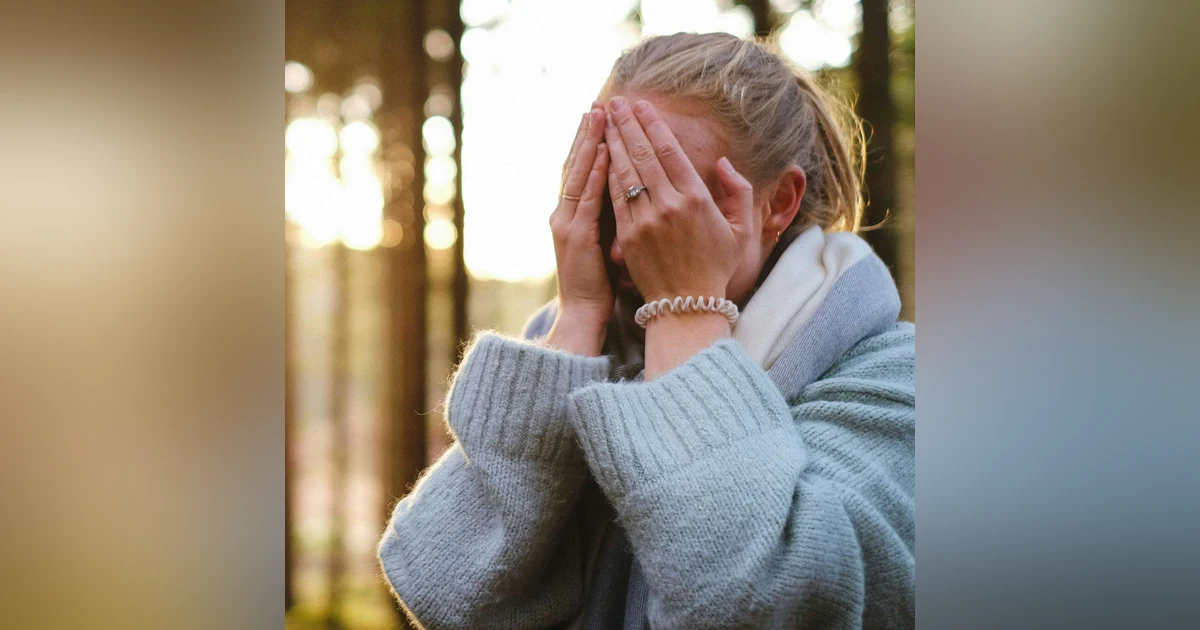

Your Emotions Are Trying to Tell You Something: Emotional Health What if the heaviness you have been carrying — the irritability, the quiet sadness, the feeling that you are one small thing away from falling apart — is not a sign that something is wrong with you, but a sign that something inside you is finally asking to be heard? In Episode 4 of the Women's History Month Reset, PK makes the case that your emotional health is not a luxury, a weakness, or something to manage in private. It is the foundation on which everything else in your life is built. And for midlife women who have spent decades showing up for everyone else, it is the one thing most urgently in need of tending.
Your emotions are not the problem. They are the signal. And this episode will help you finally learn to read them.

 Spotify
 Apple Podcasts
 Amazon Music
 Overcast
 PocketCasts
 RSS Feed
 Emotional Health in Midlife — How to Feel Your Feelings Without Falling Apart
Emotional Wellness for Midlife Women | Episode 4 of the Women's History Month Reset
You have been strong for so long that somewhere along the way, you forgot that feeling things deeply was ever an option.
You learned to manage. To compartmentalize. To put the hard feelings in a box, close the lid, and keep moving — because there was always something more urgent than your own emotional life. A child who needed you. A parent who was declining. A job that demanded your best self even on your worst days.
And you did it. Beautifully.
But the box doesn't stay closed forever.
Why Emotional Health for Midlife Women Cannot Wait Any Longer
In Episode 4 of the Women's History Month Reset, host Dr. Peggie Kirkland (PK) tackles the pillar that most midlife women have quietly neglected for decades: emotional health. Not emotional management. Not emotional performance. Actual emotional health — the ability to feel what you feel, name it honestly, process it fully, and release it without shame.
Research from the American Psychological Association confirms that chronic emotional suppression — the habit of pushing feelings down rather than processing them — is directly linked to increased rates of anxiety, depression, cardiovascular disease, and immune dysfunction. In other words, the feelings you have been swallowing for years are not disappearing. They are living somewhere in your body. And your body is keeping the score.
What Performing Strength Actually Costs You
PK draws an important distinction in this episode between genuine resilience and what she calls performed strength — the kind that looks fine on the outside while quietly falling apart within. Performed strength is what happens when a woman has learned that her emotions are an inconvenience to the people around her. So she edits herself. She softens her needs. She laughs off the things that hurt and minimizes the things that devastate.
And over time, she loses access to her own emotional life — not because she stopped feeling, but because she stopped letting herself.
This episode is the invitation to start again.
The Story That Will Stop You
PK shares the story of a woman who had mastered the performance of fine — until her body made it impossible to continue. The moment that shifted everything was not dramatic. It was quiet. And it will resonate with every midlife woman who has ever smiled through something she should have been allowed to grieve.
Your Emotional Health Self-Check and Journal Prompt
PK walks listeners through a five-question emotional wellness self-check designed to help midlife women identify where they have been performing rather than feeling. She closes the episode with this month's journal challenge:
"This month, I am making myself a priority by allowing myself to feel _________, without apologizing for it."
Maybe you write: grief, anger, disappointment, relief, joy — the kind you haven't let yourself feel because it seemed selfish when so much was still hard.
This is not permission to fall apart. It is permission to be human, which is something every strong woman deserves.
Resources Mentioned in This Episode
• American Psychological Association — Emotional Suppression Research: apa.org
• Psychology Today — Find a Therapist Near You: psychologytoday.com
• Therapy for Black Girls — Culturally Affirming Therapist Directory: therapyforblackgirls.com
• 988 Suicide and Crisis Lifeline — Call or text 988, available 24/7
Continue the Women's History Month Reset
🎙️ This episode is part of the Series Celebrating Women— seven conversations about the seven dimensions of self-care that midlife women deserve to prioritize.
Listen to the full series here: https://www.mommasmotivationalmessages.com
The Full Series:
👉Episode #1: Empty Nester & Midlife Mental Health: Signs You May Need Support & How to Get It
👉Episode #2: Midlife Fitness and Longevity: Caring for the Only Body You Have
👉Episode #3: Social Wellness for Midlife Women: Why Your Friendships Are Literally Keeping You Alive
👉Episode #5: When Did You Erase Yourself From Your Own Life?
👉Episode #6: Feeling Lost in Midlife? Your North Star Has Been There All Along
👉Episode #7: Why Does Spending Money on Myself Feel So Wrong? Financial Wellness in Midlife
• Episode 3 — Social Wellness: Your Friendships Are Medicine
• Subscribe to Momma's Motivational Messages
🔔 Connect with Dr. PK
Website: https://www.mommasmotivationalmessages.com
Instagram: https://www.instagram.com/momsmotivations
Facebook: https://www.facebook.com/mommotivates
Dr. Peggie Kirkland (PK):
Welcome back, my beautiful midlifers and empty nesters. Before we dive in, a quick recap of where we've been. In episode three, we talked about your social health, your friendships and connections, and this was the central message. Your relationships are not a luxury. They're medicine. We looked at the science, including that landmark 80-year Harvard study that found the single greatest predictor of health, happiness, and longevity. Was not wealth, not status, not even genetics. It was the quality of your close relationships.
[00:00:50] And we got honest about the loneliness epidemic and the fact that chronic loneliness carries health [00:01:00] risks comparable to smoking 15 cigarettes a day. I left you with one reframe. That is to think of your social connections like a garden that you take care of intentionally. By that, I mean know who energizes you and who drains you.
[00:01:23] And I sincerely hope you took one small action after listening to that episode. Whether it was sending one text, one voice note, or one reach-out to someone you've been meaning to reconnect with. Did you? Please let me know in the comments.
[00:01:48] Today, we are going somewhere deeper. We are talking about your emotional health. And here's what I want you to understand before we begin. [00:02:00] Your emotions are not random. They're not weaknesses. As women, we are led to believe that showing our emotions is a sign that we cannot control our feelings or that we are needy.
[00:02:17] I am here to tell you that our emotions are not inconveniences to be managed for everyone else's comfort. Your emotions are data. They're your inner GPS constantly sending you signals about what is working in your life and what is not, what you need more of and what you need less of. Where your boundaries have been crossed and where your values are not being honored.
[00:02:52] The problem is that most of us never learned to read those signals. We learned [00:03:00] to suppress our feelings, push them down, or let them come out sideways when we could no longer hold them in. I think.
[00:03:12] There were times when I would've gotten an A plus for this characteristic because I learned to push my own emotions down so far that I couldn't even recognize physical pain when I was going through it. In fact, I recall walking around with a fractured finger for two weeks before seeking medical attention.
[00:03:38] And that was after someone asked if I had gone to the doctor. That sounded like such a foreign idea. I had been putting everyone else's needs in front of my own discomfort. I don't know if any of you could relate, but that was my [00:04:00] story. That's why today we're going to do something different. We are going to lift the metaphorical hood. Think about your car for a moment. You can drive it every single day without ever looking under the hood. It gets you where you need to go. But you never check what is happening underneath the engine.
[00:04:25] The fluids, the warning lights, small problems become big ones. Things wear down quietly, and one day, something stops working, and you're stranded on the side of the road. This just happened to a friend of mine who had not put any antifreeze in her vehicle for a while. And she called me, you guessed it, from the side of the road, wondering how she got there and what to do next.
[00:04:58] Your emotional [00:05:00] life works exactly the same way. You can keep moving, keep functioning, keep showing up for everyone who needs you, without ever checking what is actually running beneath the surface. But those unexamined emotions, they don't disappear. They run in the background quietly shaping your decisions, your relationships, your energy, and your health until one day they demand your attention in a way that you can no longer ignore. Today, we are lifting the hood together, not to fix everything at once, but to finally see what is actually going on in there.
[00:05:48] One of my favorite authors is Brené Brown. In her book The Gifts of Imperfection, she describes connection [00:06:00] as the energy that exists between people when they feel seen, heard, and valued. She says, we are hardwired for connection.
[00:06:12] You know that feeling when you've been having a hard week carrying something heavy, quietly. And then one phone call with the right person, one real conversation, one moment of being truly heard, and somehow the weight shifts, you didn't solve the problem.
[00:06:36] Nothing changed externally, but you feel different, lighter, more able. That is not magic. That is biology. That is a result of the connection we made with someone who could empathize. That is what we were made for. Your body knows you need [00:07:00] connection. It has always known. We are the ones who learn to override the signal, just like we do with our vehicles.
[00:07:10] That's why it's so important to be able to identify and name what you're feeling. Have you ever said to a friend who asked how you were feeling? I just don't feel right, which is difficult to find a solution for. If what you mean is I feel overwhelmed or I feel overlooked in this moment, that's different because if you can find what's causing the overwhelm or the ways in which you're being overlooked, you can find ways to resolve that situation.
[00:07:51] Researchers refer to this ability to put a recognizable name on what you're feeling as emotional [00:08:00] granularity, and that is strongly linked to better mental health outcomes, lower rates of depression, and more effective coping strategies. The more precisely you can name what you're feeling, the more power you have to actually address it.
[00:08:22] Historically, women have been told that being emotional is a weakness from the boardroom to the bedroom. The message has been keep it together. Stay professional. Don't cry. But here's what history also shows us. Some of the most transformative moments in women's history were fueled by emotion, by righteous anger, by grief that became organizing fuel, by love that refused to accept injustice.
[00:08:57] The women who marched for [00:09:00] suffrage were not emotionless. The women who fought for civil rights were not emotionless. Emotion, when understood and channeled with intention, is power.
[00:09:15] Now, in case you're wondering, here are some signs that your emotional health needs attention. Isolating yourself from friends, family, or coworkers. Sleeping too much or too little consistently, the increased use of alcohol substances, or numbing behaviors. Persistent feelings of guilt, hopelessness, or worthlessness, neglecting personal hygiene or self-care routines, difficulty experiencing joy, the things that used to bring pleasure.[00:10:00]
[00:10:01] If any of these clues from Dr. Dan Brennan's medically reviewed work resonate with you, then it's time to take action. That action is to start paying attention to this data. For so long, you have been the one who holds it together for everyone else.
[00:10:24] The one who notices when others are struggling, the one who asks the right questions, offers the right words, shows up when it matters. Today I'm asking you to turn that same attention inward. Because you deserve the same quality of care that you've always given so freely to others. When you stop being a supporting character in everyone else's story and become the main character in your own [00:11:00] story, you will approach life with more confidence and more joy.
[00:11:07] That is what today's affirmation will help you to do. So I want you to say this affirmation like you mean it, say it like it is already true, and I want you to receive it, not just repeat it. Here's today's affirmation. I honor my emotions as messengers of truth. I am worthy of being seen, heard, and valued, beginning with myself.
[00:11:43] I honor my emotions as messengers of truth. I am worthy of being seen, heard, and valued, beginning with myself. I honor my emotions as [00:12:00] messengers of truth. I am worthy of being seen, heard, and valued, beginning with myself.
[00:12:09] In closing this episode, I encourage you to look under the metaphorical hood. Don't cover the dashboard lights. Your emotional health is not a luxury. It is the foundation of everything else we've talked about and everything we are about to discuss. In our next episode, we'll be taking a look at your professional health and work-life balance.
[00:12:40] Until then, this is PK sending you much light and a whole lot of love.